

Tax Bracket Calculator
Estimate your 2025 federal income tax using progressive tax brackets. See taxable income, marginal bracket, effective tax rate, and a bracket-by-bracket breakdown.
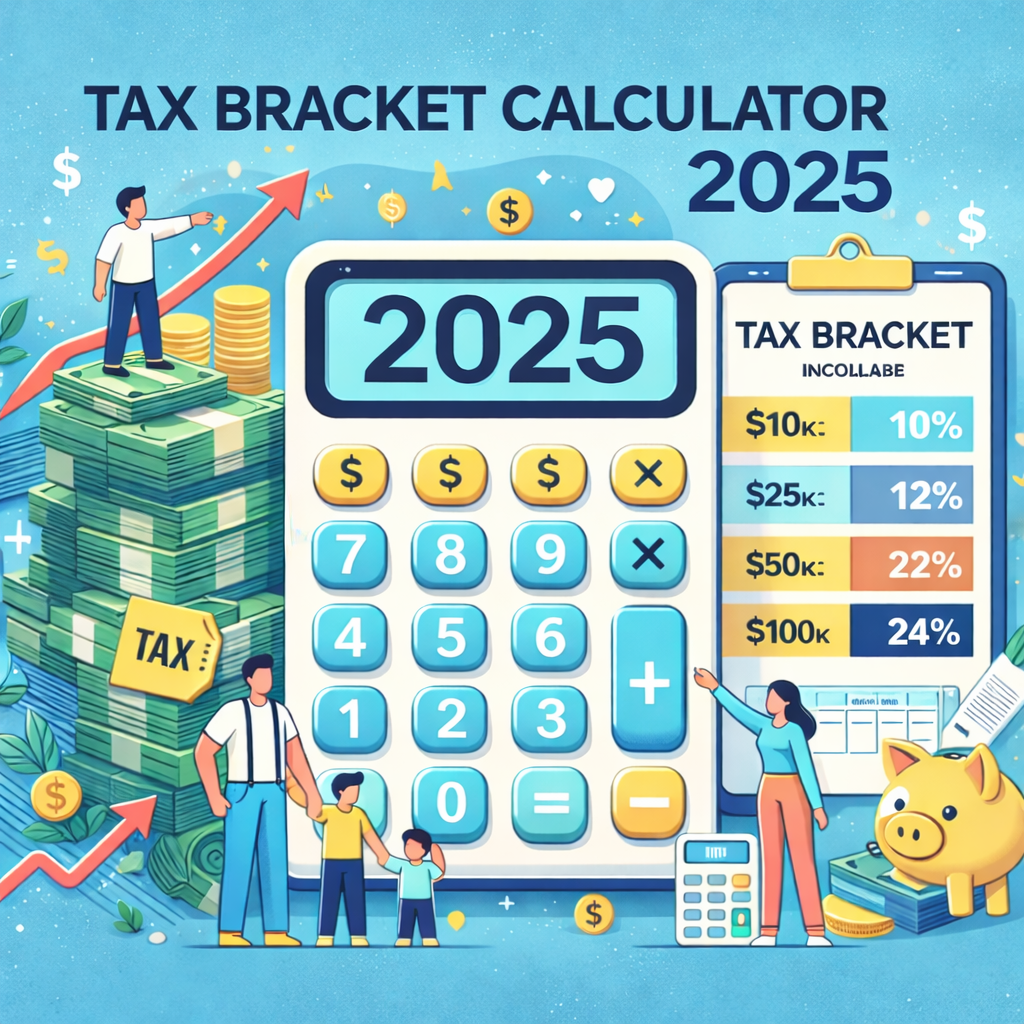
This calculator helps you estimate federal income tax using 2025 IRS bracket thresholds. It applies progressive bracket logic (only the income inside each bracket is taxed at that bracket’s rate), and optionally applies the standard deduction to estimate taxable income. For a plain-English explanation of how brackets work, see Fidelity’s overview. Fidelity
If you want the official IRS view of brackets and how marginal rates work, see: IRS: federal income tax rates and brackets.
Enter gross income, choose filing status, and optionally override taxable income if you already know it. This tool is federal-only and does not include credits, AMT, NIIT, or capital gains tables.
Your marginal tax rate applies only to the last portion of taxable income within your top bracket, while your effective tax rate reflects total tax divided by total income. The IRS explains bracket mechanics here: IRS: tax rates and brackets.
If you choose “Use standard deduction,” the calculator reduces income by the 2025 standard deduction (by filing status) to estimate taxable income. For official inflation-adjusted deduction values, see IRS annual inflation adjustment releases. IRS Newsroom
Planning note: this is federal-only and excludes credits, AMT, NIIT, capital gains brackets, and state/local taxes.
No. Only the portion of taxable income within each bracket is taxed at that bracket’s rate. That’s why your effective rate is usually lower than your marginal rate.
For a planning estimate, use an AGI-like figure or taxable wage estimate. If you already know your taxable income, use the “Override taxable income” field.
No. This calculator is for ordinary federal income tax brackets only.
You can enter a custom deduction amount, but this tool does not model credits, itemized deduction limits, AMT, NIIT, or other advanced rules.